
Description
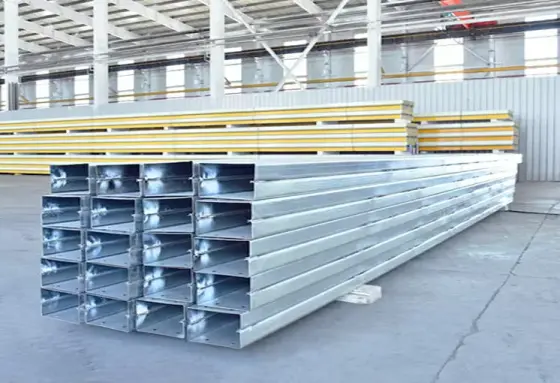
5052-H32 Aluminum Angle
About the aluminum
5052 H32 Aluminum Alloy Properties & Applications
5052 H32 aluminum alloy is one of the most widely used aluminum-magnesium alloys, known for its excellent corrosion resistance, strong formability, and outstanding bending performance. This alloy is commonly used in sheet metal fabrication, automotive parts, marine applications, cabinets, enclosures, and industrial manufacturing.
The “5052” designation identifies the alloy series, while the number “5” indicates that the material belongs to the aluminum-magnesium alloy family. The magnesium content in 5052 aluminum typically ranges between 2.2% and 2.8%, with most manufacturers processing the alloy at approximately 2.5% magnesium content. Because of this composition, 5052 aluminum is often referred to as AlMg2.5.
What Does H32 Mean in 5052 H32 Aluminum?
The “H32” temper designation describes the processing and hardness condition of the aluminum alloy.
- H indicates strain hardening and partial annealing
- 3 means the material has been stabilized after work hardening
- 2 represents a quarter-hard temper condition
This process gives the aluminum improved strength while maintaining excellent workability and bending performance. The material is partially annealed to reduce excessive hardness during forming while retaining enough strength for structural applications.
Understanding Aluminum Hardness Grades
In aluminum temper classifications, the final number directly relates to the hardness level of the material.
Common hardness grades include:
- H32 – Quarter-hard
- H34 – Half-hard
- H36 – Three-quarter hard
- H38 – Full-hard
Under the same alloy series, higher numbers indicate greater hardness and strength. For example, H34 aluminum is harder and stronger than H32 aluminum. Softer tempers are generally better for stretching and forming applications, while harder tempers offer increased structural rigidity.
Key Features of 5052 H32 Aluminum
5052 H32 aluminum alloy offers several important advantages:
- Excellent corrosion resistance
- Outstanding bending and forming performance
- Good weldability
- Strong oxidation resistance
- Lightweight yet durable structure
- Smooth surface finish
- Excellent sheet metal processing capabilities
One of the alloy’s most valued characteristics is its ability to perform 90-degree bends without cracking, making it highly suitable for precision sheet metal fabrication.
Common Applications of 5052 H32 Aluminum
Because of its excellent balance of flexibility, corrosion resistance, and moderate strength, 5052 H32 aluminum is widely used in:
- Chassis and cabinets
- Electrical enclosures
- Sheet metal components
- Marine equipment
- Vehicle panels
- Fuel tanks
- Architectural panels
- Industrial equipment
- Decorative aluminum products
Its durability and forming ability make it a preferred material for products requiring repeated bending and shaping.
Physical Properties of Aluminum
Aluminum is a lightweight silver-white metal with a density of approximately 2.7 g/cm³, a melting point of 660.4°C, and a boiling point of 2467°C. Aluminum and aluminum alloys are widely used because of their excellent physical and mechanical properties.
Pure aluminum has exceptional reflectivity, especially for ultraviolet light, making it ideal for reflective coatings, mirrors, and solar energy materials. Vacuum aluminum plating is commonly used to produce lightweight reflective films and solar cell components.
Electrical & Thermal Conductivity
Aluminum is an excellent conductor of electricity and heat. Although copper and silver have higher conductivity, aluminum provides a lightweight and cost-effective alternative for:
- Electrical wiring
- Power cables
- Heat exchangers
- Cooling systems
- Industrial heat sinks
- Cookware and thermal equipment
Advantages of Aluminum Alloys
Pure aluminum is relatively soft, but alloying elements such as magnesium, copper, manganese, and silicon significantly improve its strength and durability while maintaining low weight and corrosion resistance.
Modern aluminum alloys are extensively used in:
- Aerospace engineering
- Automotive manufacturing
- Railway transportation
- Marine construction
- Satellites and spacecraft
- Rocket fuel storage systems
At extremely low temperatures, many aluminum alloys maintain or even improve their toughness and strength, unlike certain steels that become brittle. This makes aluminum alloys highly suitable for cryogenic applications such as liquid oxygen and hydrogen storage used in aerospace and rocket technology.
| Place of Origin: | Shandong, China |
| Temper: | T3-T8 |
| Shape: | Angle |
| Model Number: | customization |
| Tolerance: | ±5% |
| Delivery Time: | 15-30 days |
| Color: | Customized Color |
| Surface treatment: | Mill Finish,power coating,anodizing,wooden grain,etc |
| Application: | Decorations, Decorations,Construction,Industry |
| Processing Service: | Bending, Decoiling, Welding, Punching, Cutting |
| Quality Standard: | GB 5237-2008 |
| Thickness: | 0.3mm~3mm/Customized |
buy 5052-H32 aluminum angle wholesale, bulk 5052-H32 aluminum angle supplier, 5052-H32 aluminum angle distributor, wholesale 5052-H32 aluminum alloy angle, bulk buy 5052-H32 aluminum angle, 5052-H32 aluminum angle bulk order, 5052-H32 aluminum angle manufacturer direct, 5052-H32 aluminum angle bulk pricing, order 5052-H32 aluminum angle in bulk,
Reviews
There are no reviews yet.